Energy Update



Visualization from road to tunnel invert concrete in nepal
-
 Dev Raj Dahal
- 19 August, 2025
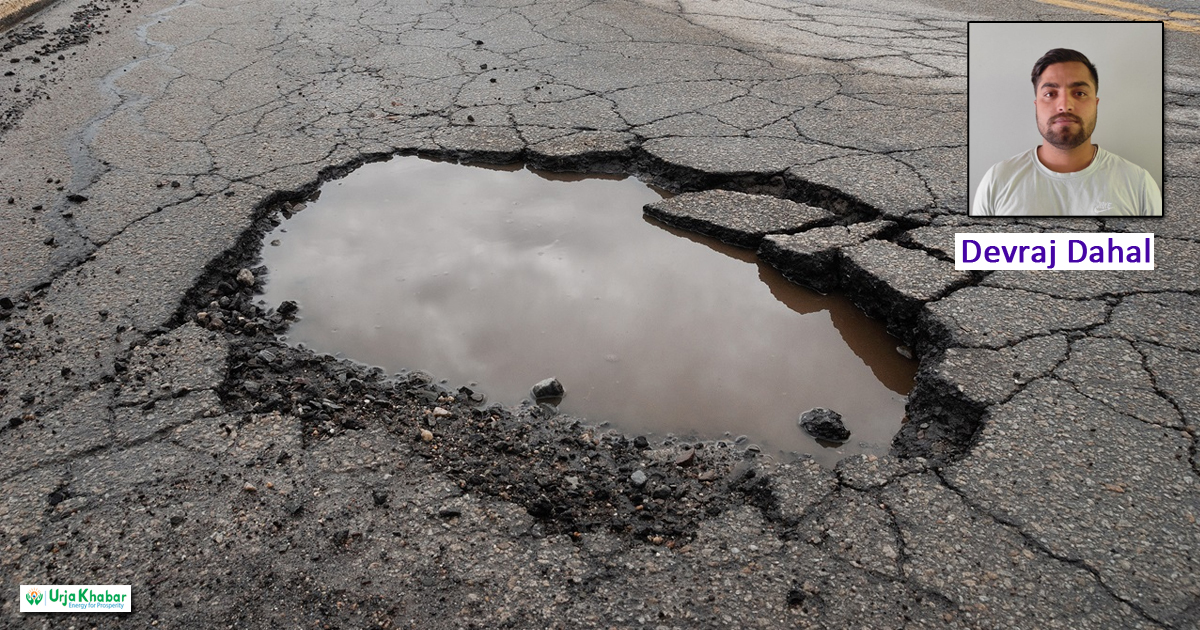
It was a rainy day with a cup of tea. I saw a poor concrete road condition in front of me and then I visualized the same thing in tunnel invert concrete lining. So I am sharing my visualization from road to tunnel invert lining.
In a tunnel invert, erosion typically occurs due to continuous water ingress, poor drainage, weak concrete/lining, improper compaction, and improper cleaning of dust particles at the time of placing the invert concrete, leading to scouring and washing away of fine material. Fine particles beneath the concrete lining get washed away.

If the same construction practice (poor compaction, lack of waterproofing, careless concrete placement) is applied in a tunnel invert, it could indeed lead to dangerous erosion and cavity formation under the lining , which compromises tunnel stability. Water keeps enlarging the cavity under the invert. The concrete slab loses support and begins to crack. Similar to how a pothole grows on a road (as seen in the figure), but in a tunnel it is more dangerous.
Large hollow spaces form under the invert lining. Settlement of the invert occurs. It may cause some structural and safety risks in underground construction works. The invert may break or collapse in sections of the tunnel. Water pathways widen, leading to uncontrolled inflow. Eventually, this can destabilize sidewalls and the crown if drainage is not fixed.
So, proper drainage behind tunnel lining (drainage holes, pipes, geotextile) is essential. Quality concrete placement, no honeycombing, proper invert cleaning, proper compaction and curing. Use of waterproofing membrane before final lining. Daily monitoring/checking for wet spots, cracks, or subsidence. Immediate grouting of any observed cavities or erosion should be done. So the condition we saw on the road in a photo is a harmless nuisance pothole. But the same condition inside a tunnel will lead to a major structural hazard in an underground construction project.
The Author is a Geologist.
Conversation

More News


- Nepal's First Energy Based News Portal
-
Energy Information Center Pvt. Ltd.
Hemant Marg-11, Babar Mahal, Kathmandu
- Info. Dept. Reg. No. : 254/073/74
- Telephone : +977-1-5321303
- Email : [email protected]