Energy Update

Nepal’s Hydropower Development: Beyond Generation and Electricity Exports
-
 Prakash Dhungana, PhD
- 24 November, 2026
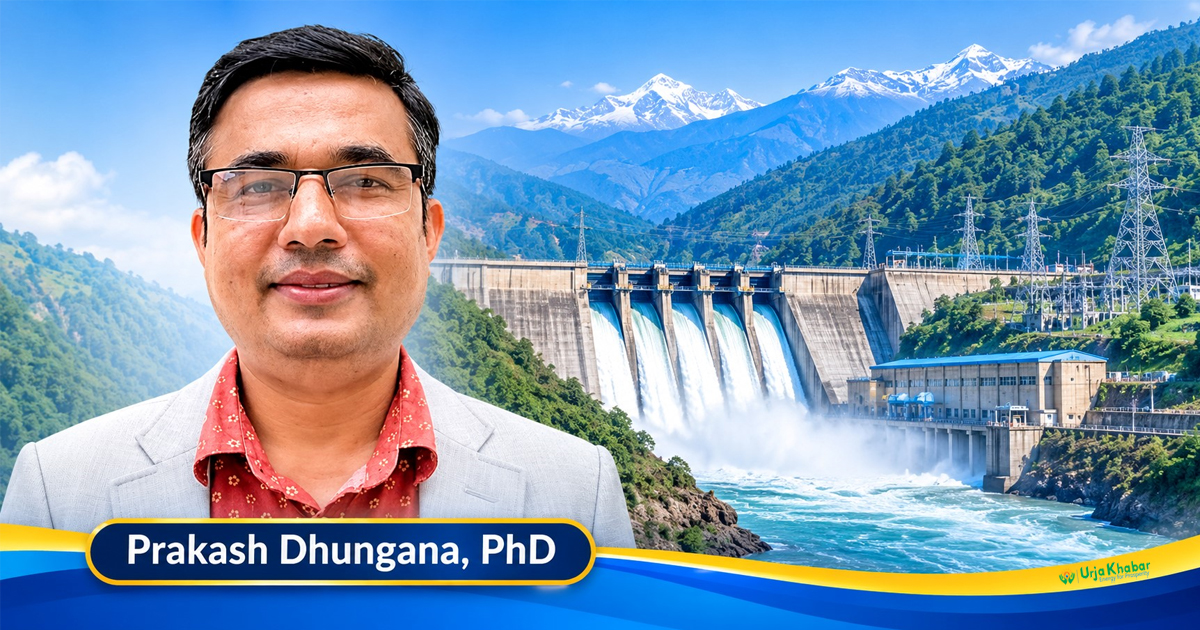
Nepal is increasingly discussing hydropower generation, transmission networks, electricity exports to India and Bangladesh, and government revenue through electricity sales and taxes. These are undoubtedly essential priorities for our country’s economic development. In this regards , we must update our policies, regulations and institutional arrangements to achieve our targeted generation and export capacity.
However, I believe there is another equally important issue that deserves serious attention: the quality of hydropower development, effective project governance and sustainable development of local communities.
Quality should not be limited to concrete grades, equipment specifications or machinery brands. It must cover the entire project cycle, including planning, design, construction, supervision, contract management, safety, operation and long-term sustainability.

Let’s consider the financial scale.
Suppose a hydropower corridor has the potential to generate 5,000 MW, with an estimated development cost of NRs 22 crore per MW. The total investment would be approximately NRs 110,000 crore. Under the existing 0.75% community development allocation, approximately NRs 825 crore would be available for community development.
Furthermore, approximately 7–10% of the total project cost, equivalent to NRs 7,700–11,000 crore, is already included in project budgets for access roads, construction power and related infrastructure.
These are enormous resources. The question is whether we are utilizing them through integrated planning or spending them independently, with fragmented priorities and insufficient coordination.
Establish a Hydropower Corridor Development and Coordination Committee. This is not merely my personal opinion; it is a concern shared by the entire hydropower developers. A hydropower project may extend across two or more municipalities, districts and even provinces. Multiple projects may share the same geographical corridor.
If coordination becomes difficult even when a project extends across two Palikas, imagine the challenges of managing projects across several districts and provinces. Developers and construction teams often spend valuable time dealing with overlapping local demands, fragmented administrative processes, political interference and uncoordinated community expectations.
This creates unnecessary risks, delays, additional costs and pressure on project implementation. We need a legally empowered, technically competent and accountable corridor-level institution.
hat should this committee do?
1. Integrated access road development: Coordinate permanent access roads (not merely project approach roads), connecting hydropower projects with local settlements, markets and economic centres.
2. Construction power and community electricity: Coordinate construction power infrastructure and plan for reliable electricity supply to surrounding communities, including appropriate arrangements for infrastructure transfer and future operation.
3. Strategic community development: Ensure that the existing 0.75% community development allocation is utilized through an integrated corridor-level plan. Investment should prioritize sustainable facilities such as education, healthcare, drinking water, local roads, employment and economic opportunities rather than fragmented or short-term activities.
4. Shared infrastructure development: Avoid duplication of roads, bridges, electricity infrastructure and other facilities through coordinated planning among hydropower projects.
5. Independent project quality monitoring: Strengthen technical monitoring beyond concrete grades and equipment brands. Monitoring should cover design compliance, geological conditions, construction methodology, workmanship, safety, contract administration and operational reliability.
6. Reduce community-related project risks: Establish transparent mechanisms for resolving local disputes, coordinating commitments and addressing community concerns before they become major project disruptions.
Local development must continue after construction.
One important question we must ask is: What happens to the surrounding villages after hydropower construction is completed?
During construction, local businesses, workers and service providers benefit from project activities. But once construction ends, contractors and workers leave. Without sustainable infrastructure and economic opportunities, many villages may gradually become depopulated.
Hydropower development must therefore be connected with long-term local economic development.
The proposed committee should not replace elected local governments or take away their constitutional responsibilities. Rather, it should provide a legally defined mechanism for coordinated corridor-level planning, implementation and monitoring, with meaningful representation of local governments and communities.
Finally, let’s make hydropower development easier.
Let’s reduce unnecessary risks for investors and developers, remove avoidable obstacles for construction professionals and provide relief to the real warriors working in hydropower development and construction.
Let engineers focus on engineering, developers focus on development, contractors focus on construction and operators focus on operation. Let an empowered corridor-level institution take responsibility for coordinated local infrastructure and development.
Nepal needs more than transmission lines, installed capacity and electricity export revenue. We need quality infrastructure, predictable governance, efficient investment and sustainable development for the communities that host our hydropower projects.
The success of hydropower should not be measured only by how much electricity we generate and export, but also by how well we build and what lasting benefits we leave behind.
Let’s build hydropower. Let’s develop corridors. Let’s develop communities.
Dr. Dhungana, is the Project Manager of Upper Kabeli Hydropower Project.
Conversation
Prakash Dhungana, PhD
Dr. Prakash Dhungana, is the Project Director/Manager: He has over 20 years of experience in hydropower project design, supervision and management. He is responsible for managing projects on a day to day basis.

More News




- Nepal's First Energy Based News Portal
-
Energy Information Center Pvt. Ltd.
Hemant Marg-11, Babar Mahal, Kathmandu
- Info. Dept. Reg. No. : 254/073/74
- Telephone : +977-1-5321303
- Email : [email protected]