Energy Update



Engineering Resilience: The Future of Nepal’s Hydropower and Insurance
-
 Arun Rajauriya
- 6 October, 2026
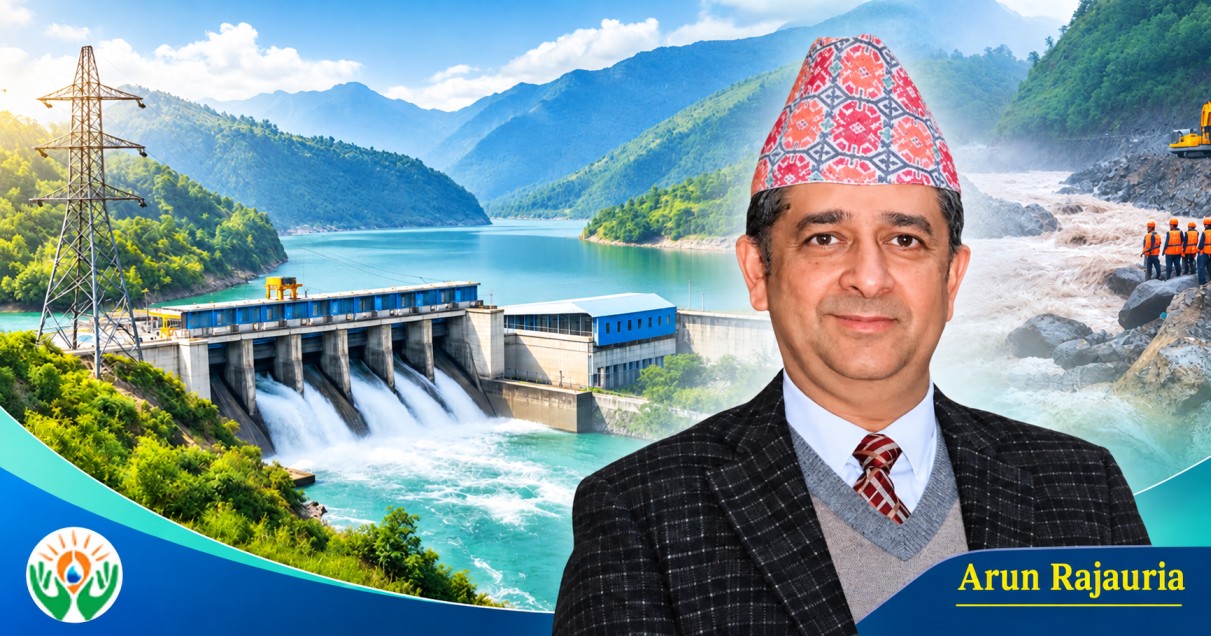
Nepal’s surging rivers descend through steep Himalayan valleys, offering one of the world’s most promising frontiers for clean energy. Yet the same geography that grants the nation its massive hydroelectric potential exposes its infrastructure to extreme natural hazards. There is a clear call to action: Nepal must shift insurance from a passive, post-disaster payout mechanism into an active driver of engineering resilience. Addressing this critical balance must be the central focus for the resilient hydropower plants in Nepal.
The Himalayan Dilemma

Developing hydropower in the Himalayas means navigating a complex matrix of environmental threats. Flash floods, landslides, seismic activity, heavy sedimentation, and climate-driven uncertainties routinely test the physical limits of river infrastructure. Recent climate events across the region demonstrate that these hazards are far from theoretical. When floods or slope failures disrupt access roads, transmission corridors, or headwork, generation grinds to a halt precisely when regional grids need power most.
Rethinking Insurance
Traditionally, project developers view insurance as a transactional requirement—a financial safety net meant to compensate for damage after a crisis occurs. However, for capital-intensive assets designed to operate across several decades, this reactive mindset is insufficient. Insurance must be integrated directly into a project's risk-management architecture from the earliest stages of feasibility, geotechnical assessment, and design through to commissioning and daily operations. The primary objective should not be paying for losses after a failure, but systematically lowering the probability and severity of damage in the first place. This requires aligning technical engineering standards with underwriting practices, ensuring insurers understand dam dynamics while engineers design with long-term risk profiles in mind.
Systemic Risks
A hydropower facility cannot be treated as an isolated concrete structure; it operates as an interconnected ecosystem. Catchments, intake structures, pressure tunnels, powerhouses, access roads, and grid connections all rely on one another. A failure in an access road or diversion canal can paralyze the entire plant. Furthermore, shifting climate patterns mean historical weather records are no longer a sufficient baseline for future risk. Accelerating glacial retreat and the rising threat of Glacial Lake Outburst Floods (GLOFs)—exemplified by climate-induced damages to facilities like the Golen Gol Hydropower Plant in Pakistan—demand forward- looking risk modeling rather than static reliance on past hydrological data.
Collaborative Action
Achieving long-term stability across the sector requires coordinated alignment among developers, insurers, commercial banks, technical consultants, and regulators. Premium structures need to evolve toward risk-based models that reward superior site investigation, robust engineering, and continuous structural monitoring with better coverage terms. At the same time, insurance pricing must remain predictable and commercially viable so it does not hinder project financing. When higher engineering standards translate directly to lower operational risk and better financial terms, the entire clean energy ecosystem becomes far more bankable and secure.
Economic Resilience
Hydropower represents much more than megawatt figures for Nepal—it is the foundation of national energy security, industrial capacity, and economic self-reliance. When a power plant experiences prolonged downtime due to preventable structural damage, the economic fallout hits local communities, public finances, grid stability, and investor confidence alike. Safeguarding these high-value assets requires a collective culture where hazards are engineered out during design, resilience is built before disaster strikes, and insurance is designed as an integral pillar of infrastructure planning.
The writer is a President of Nepal Hydropower Association (NHA).
(Rajauria opined the view on conference with theme 'Resilient Hydropower: Transforming Nepal’s Insurance Landscape' organized by the Nepal Hydropower Association (NHA) in Kathmandu.)
Conversation

More News



 pokharel.jpg)


- Nepal's First Energy Based News Portal
-
Energy Information Center Pvt. Ltd.
Hemant Marg-11, Babar Mahal, Kathmandu
- Info. Dept. Reg. No. : 254/073/74
- Telephone : +977-1-5321303
- Email : [email protected]