Energy Update



Indian Cabinet Approves ₹2,584 Crore Scheme to Boost Small Hydro Power Development
-
 Urja Khabar
- 22 March, 2026
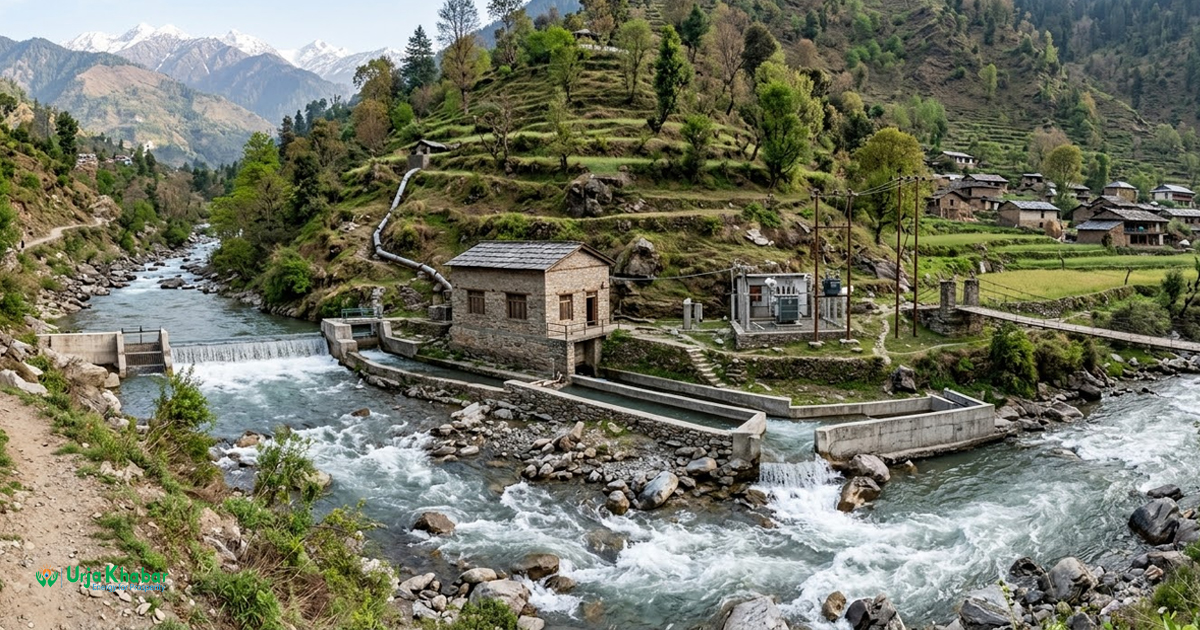
Kathmandu | The Union Cabinet, chaired by Prime Minister Narendra Modi, has officially approved the ‘Small Hydro Power (SHP) Development Scheme’ for the period spanning FY 2026-27 to FY 2030-31. With a significant financial outlay of ₹2,584.60 crore, the scheme is set to facilitate the installation of small hydro projects with a total approximate capacity of 1,500 MW.
This initiative specifically targets projects between 1 MW and 25 MW, aiming to tap into the vast potential of hilly and North Eastern states. For projects located in the North Eastern regions and districts sharing international borders, the government has announced a Central Financial Assistance (CFA) of ₹3.6 crore per MW or 30% of the project cost, whichever is lower, with a maximum cap of ₹30 crore per project.

In other states, the assistance is set at ₹2.4 crore per MW or 20% of the project cost, capped at ₹20 crore. This financial structuring is designed to make small-scale hydro-generation viable in remote and difficult-to-reach locations that have previously struggled to attract investment.
Beyond direct subsidies, the government has earmarked ₹2,532 crore specifically for project support, a move expected to trigger a massive influx of private investment totaling approximately ₹15,000 crore into the clean energy sector. A key pillar of the scheme is its alignment with the 'Atmanirbhar Bharat' mission, as it mandates that 100% of the plant and machinery be sourced from indigenous manufacturers, thereby strengthening the domestic supply chain.
Furthermore, to ensure a steady pipeline of future projects, ₹30 crore has been dedicated to assisting state and central agencies in preparing Detailed Project Reports (DPRs) for about 200 new projects. This strategic planning ensures that the momentum in the SHP sector continues well beyond the current five-year window.
The socio-economic impact of the scheme is equally profound, with projections estimating the creation of 51 lakh person-days of employment during the construction phase alone. Once operational, these projects will provide steady employment in maintenance and operations within rural and remote communities. Because small hydro projects are decentralized, they require minimal transmission infrastructure, which drastically reduces transmission losses compared to large-scale power plants.
Environmentally, these projects are highly sustainable; they avoid the large-scale land acquisition, deforestation, and community displacement typically associated with mega-dams. With an operational lifespan ranging from 40 to over 60 years, these SHPs will provide a long-term foundation for rural development and energy security, rejuvenating the sector and accelerating India’s transition toward a greener economy.
Conversation


More News



- Nepal's First Energy Based News Portal
-
Energy Information Center Pvt. Ltd.
Hemant Marg-11, Babar Mahal, Kathmandu
- Info. Dept. Reg. No. : 254/073/74
- Telephone : +977-1-5321303
- Email : [email protected]