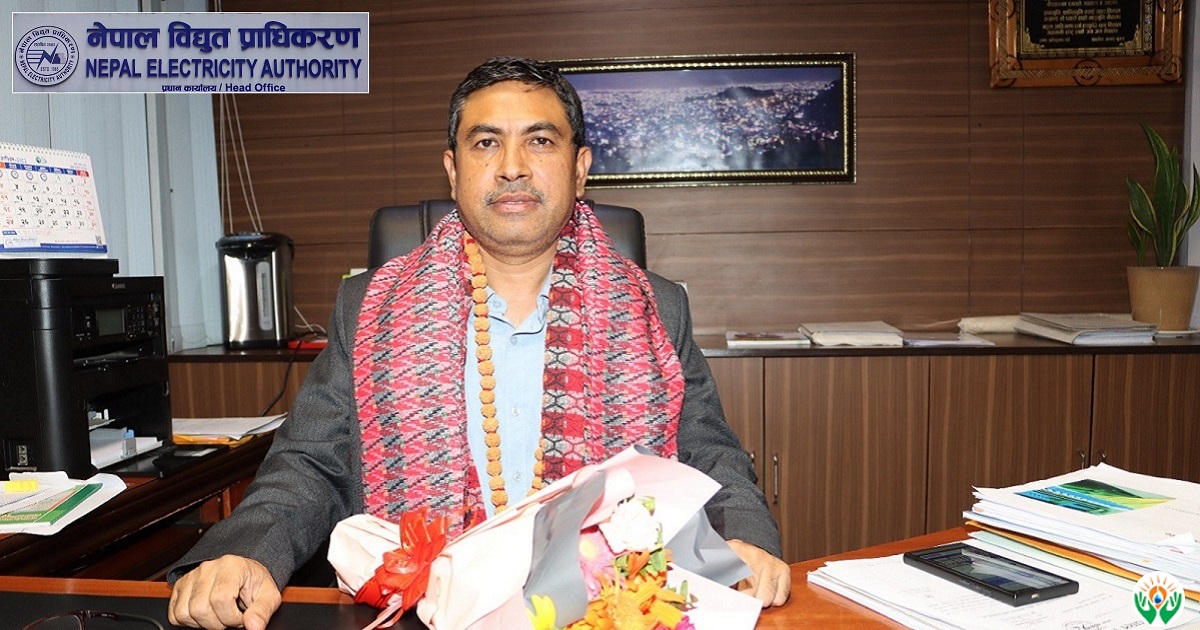
 Sher Singh Bhat
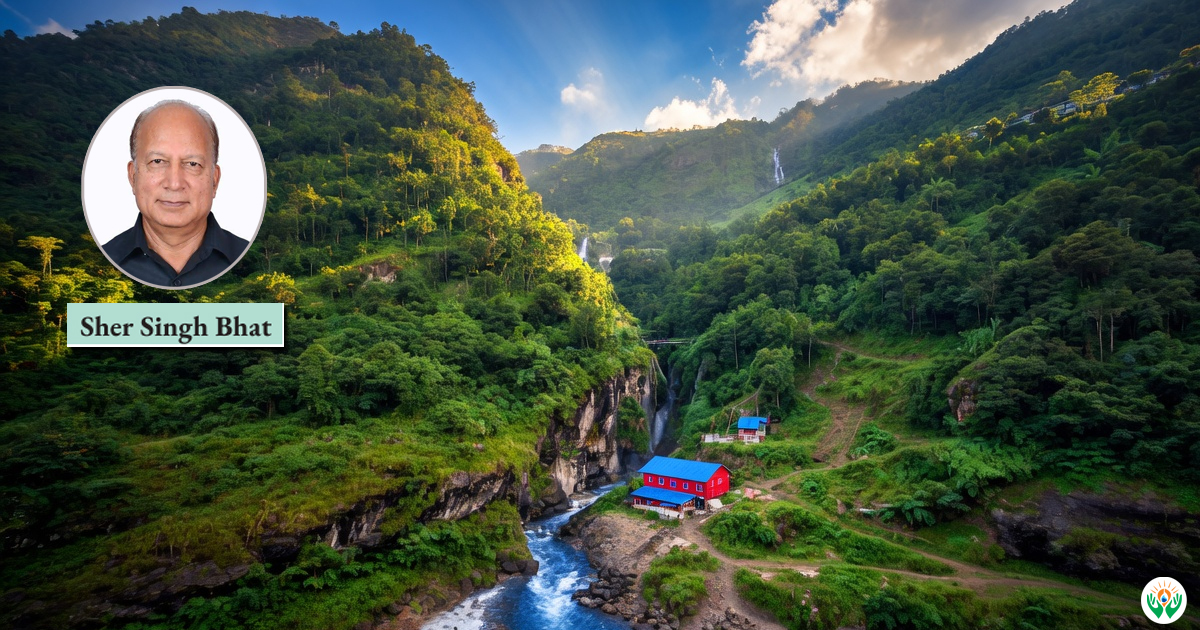
Era of Public Investment
In 1968 BS (1911 AD), Nepal started 500 KW Pharping Hydropower as its fi rst hydroelectric project, which was then progressed to 640 KW Sundarijal in 1991 BS (1934 AD) and 1600 KW Letang under Morang Hydro in 1996 BS (1939 AD). At the time, those projects were considered big, not small. Over time, as hydropower sector entered megawatt capacity, these projects have appeared smaller.

Nepal began its planned development through implementation of the First Periodic Development Plan (2013-2018 BS). Under the First, Second, Third and Fourth Plans, hydropower projects such as Trishuli (18 MW), Panauti (2.4 MW), Sunkoshi (10.05 MW) and Seti (1MW) and several diesel generation centers were built in the country under the public sector with the grant contribution of friendly countries.
Under the Fifth Plan (2033-2038 BS), the goal was set for to electrify all the district headquarters of the country albeit through construction of off -grid generation projects. Accordingly, the ‘Small Hydropower Development Board’ was formed in 2034 BS.
This onwards, small hydropower entered the lexicon of Nepal’s electricity sector. From the Fifth to the Ninth Periodic Plan (2055-2060 BS), small hydropower projects including Tinau (950 KW), Gajuri (25KW), Thansing (20 KW), Baglung (200 KW), Dhading (32 KW), Gorkhe (64 KW), Jumla (200 KW), Achham (240KW) and Tatopani (2MW) were developed with the public investment through the same “board”. Nevertheless, licenses were also being issued for development of hydropower projects (initially smaller in size) through private investment under the Electricity Act 2049 BS.
Private Investment and Small Hydropower
With the Electricity Act 2049 opening the gateway for private sector investment in electricity generation, large projects such as Khimti and Bhotekoshi were installed with foreign direct investment (FDI). The country had no experience in the appropriate procedures, associated risks and certainty of benefits of private investment in electricity development. The financial capacity of domestic fi nancial institutions was also limited. Therefore, in the beginning, small projects were the priority of domestic fi nancial institutions in terms of debt investment. As a result, projects such as Indrawati III (7.5 MW), Piluwa Khola (3 MW), Sunkoshi Sana (2.5 MW), Chakukhola (1.5 MW), Baramchi (0.98 MW), Rairang (0.5 MW), Khudi (3.45 MW), Syange (0.183 MW), Thoppal Khola (1.4 MW), Sisne Khola (0.75 MW), Feme Khola (0.995 MW), Pati Khola (0.996 MW) and Ridi Khola (2.4 MW) were built with domestic private investment. These projects helped improve the capacity and confi dence of domestic investors and lending institutions in electricity generation. As a result, large projects like the 456 MW Upper Tamakoshi could be completed with domestic investment.
Criteria and Classification
The history of hydropower development has shown that projects once considered large became smaller over time. However, according to international classifi cation based on capacity, a project up to 5 KW is considered pico-hydro, 5-100 KW as micro-hydro, 100 KW-1 MW as mini-hydro and 1-25 MW as small hydropower. Constitution of Nepal 2072 BS has classifi ed small hydropower under the jurisdiction of the local level, medium-size projects under provincial jurisdiction and large hydropower under federal jurisdiction.
In the Electricity Bill presented in the parliament last time, projects up to 5 MW were allocated to jurisdiction of locals considering as small.
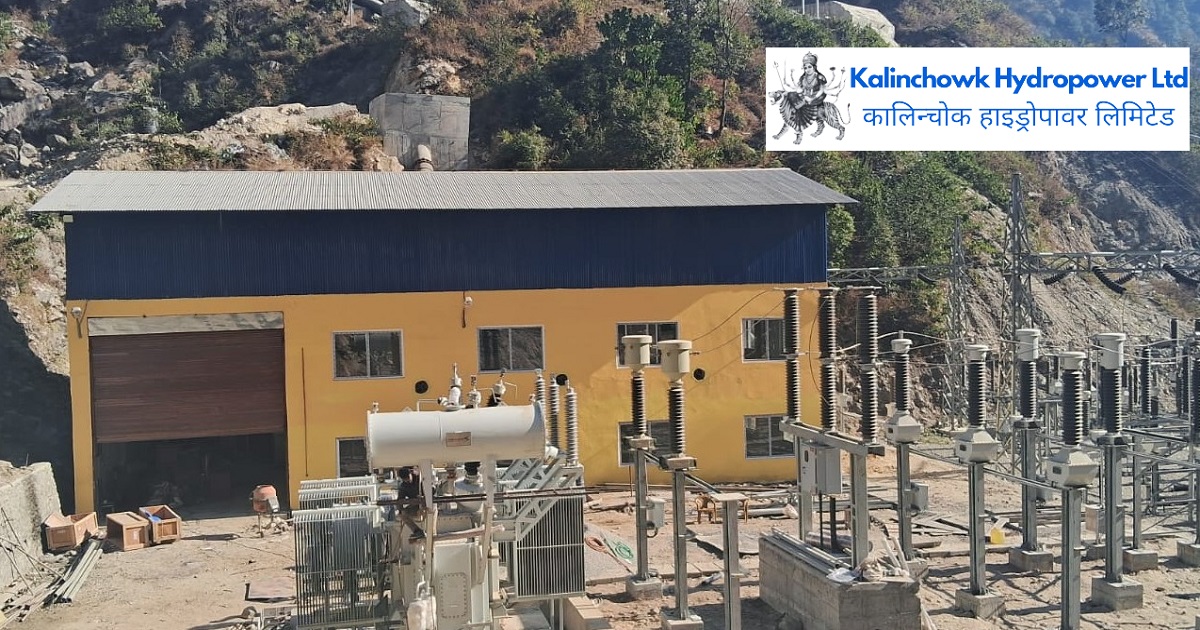
Currently small hydropower projects in this country are operating with public investment and ownership (most of them under Nepal Electricity Authority), private investment and ownership as well as community investment and ownership. Among these, those connected to the national system are known as grid-connected and those not integrated in the national grid are known as off -grid small projects.
Current situation
With expansion of the national electricity distribution system, the existence of small off -grid projects has started to fall at risk as local communities gain access to electricity supplied by the central system. Some potential projects have also been connected to the grid, while projects that do not have this potential, currently struggle for their existence. Many projects that were once operated with the aim of providing electricity to the people at the expense of the state have been fi nding it diffi cult to balance between their operating expenses and the income from the sale of electricity. For this reason, some of the small projects of the Nepal Electricity Authority (NEA) that are not in operation have been dilapidated. Some small hydropower projects of community and private investment have been connected to the national electricity distribution system directly or through mini grid with the support from Alternative Energy Promotion Center. There is a further program to connect additional few of them. Thus, three types of small projects and related issues have come forth:
(a) Small hydropower plants connected to the grid with public and community investment are currently in operation. Although there are no major problems seen in their operation at present, major subnational governments have been observed due to the current three tier state structure regarding the issues related to water use right. This has led the promoters in discomfort in their business.repairs and operations may not be financially feasible in the future. Projects that are not economically viable will automatically be closed. There is currently no legal clarity on the management of fixed assets, including land, machinery and equipment, of closed public and community-based hydropower plants. The new electricity bill must address this issue too.
(b) Few of the off -grid projects that were built and operated in the past with public, community or private investment are not in operation due to the high cost of repairs and higher operating costs compared to production. In the case of such hydropower plants, a policy decision should be made to connect them to the grid if technically and economically feasible, or to close them permanently after proper management of the fi xed assets. If there is a possibility that the dams and canals of such projects will be used for alternative uses such as irrigation or drinking water, it is appropriate to draft and implement a policy specifying the method of transfer to local governments for alternative use.
(c) Community or private investment hydropower projects connected to the grid, constructed and operated by obtaining a license from the Government of Nepal and entering into a Power Purchase Agreement (PPA) with the NEA, are in commercial operation. At present, such projects are facing some problems related to licenses, PPA, and property rights on water mass. The promoters of these projects have been individually and collectively demanding the government to address such issues.
Problems of private gridconnected projects in operation
1. Although in the past, projects were constructed with approval from the government-designated body, frequent intervention from subnational governments have been observed due to the current three tier state structure regarding the issues related to water use right. This has led the promoters in discomfort in their business.
2. The PPAs of small projects are also complicated like the PPAs of mega projects. These projects are based on the water resources of local streams with low discharge. Due to this, the fl ow of the river and accordingly the electricity production changes widely due to seasonality. Therefore, the PPAs should not have “give or take” provisions for hydrological reasons and should be paid for electricity recorded by the energy meter of the project at the end of the month. Implementing a simple one-page PPA of that nature and amending the previous PPAs accordingly would seem to be convenient for both the NEA and the promoters.
3. Small projects are mostly connected to the grid through 11 kV or 33 kV distribution systems that are prone to frequent interruptions. Such interruptions in the associated distribution system reduce the monthly electricity generation of the project to a considerable level. By installing a data logger at the interconnection point of the project and the grid, the interruptions and production losses in the NEA’s system can be calculated throughout the month. If the Power Purchase Agreement is amended to include a provision in the PPA compelling NEA to pay for all the under-dispatched energy due to interruption in the distribution system, promoters would get some relief.
4. Since small hydropower does not have economies of scale, they are comparatively more vulnerable to climate change. In this case, it seems appropriate to make the small hydropower license tenure for 50 years and the PPA for 45 years.
5. The purchase rate of some small projects that signed long ago is very low. After the construction of the project, the interest rate of the loan is found to have changed widely. This has led to a situation where the undergoing loan cannot be repaid even after a long operating period. In this way, for the upliftment of financially distressed projects, the promoter would get some relief if the previous purchase rate were increased by at least 50 percent until the remaining loan is repaid.
Future of Small Projects
A section of economists believe that the country can develop rapidly by operating mega projects related to infrastructure. Others are of the opinion that sustainable development can only be achieved if all local levels become self-reliance by operating local-level infrastructure and industrial projects based on local resources. It seems that physical development has taken a leap forward from mega projects for the time being, but it is becoming expensive through foreign financial resources, imported raw materials and skills.
In Nepal too, when operating mega hydropower projects using foreign loans, raw materials and skills, the state has to bear the longterm burden as well as forex risk. Sustainable development can only be meaningful if each local level is self-suffi cient in terms of food, shelter and cloth. In the same context, if local
levels are self-suffi cient in energy through local resources, the nation will gradually become stronger. If a mega project built with foreign loans, raw materials and skills is aff ected by natural disasters, the state will have to bear huge losses, and the people will have to suffer accordingly. However, such risks are reduced in a system based on small scale projects.
Therefore, mega projects must be built to meet the energy needs of big cities and industries. But to ensure local self-reliance, control capital flight, and reduce the risk of natural disasters, small hydropower should be built at the local level and a certain proportion of them should be maintained in the system. In this regard, it is not appropriate to argue on the relevance and future of small hydropower in Nepal.
This article is taken from the 8th issue of urja khabar, a bi-annual magazine. Which was published on January, 2026. The writer is an energy expert and former Deputy Managing Director of the Nepal Electricity Authority. The text is an unofficial translation from Nepali version