 Urja Khabar

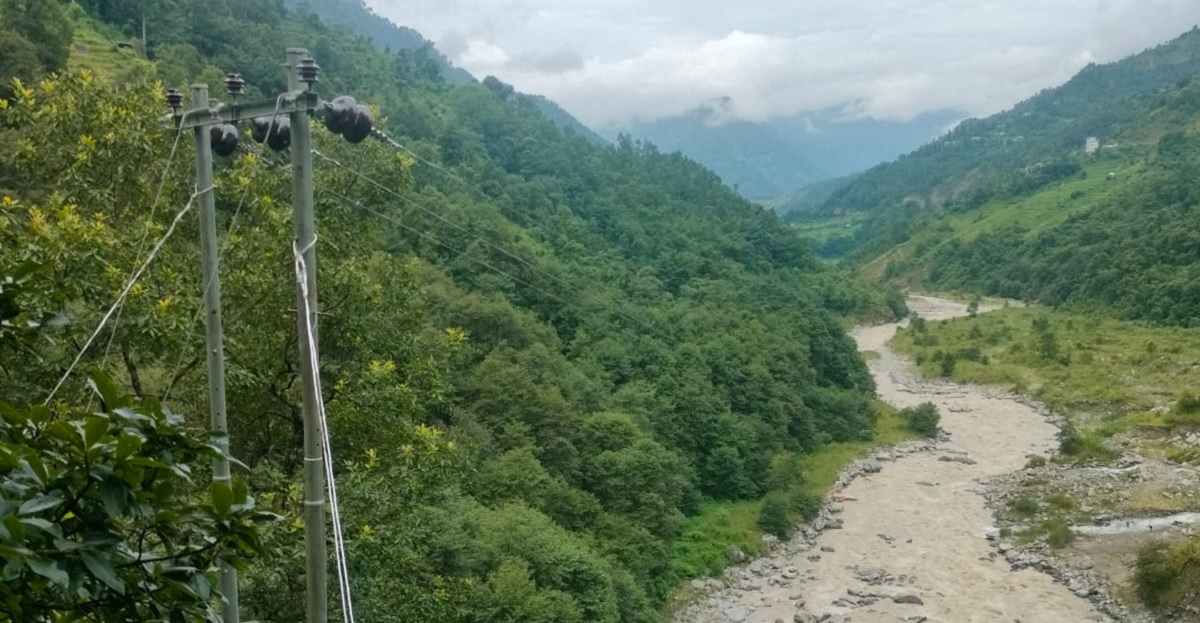
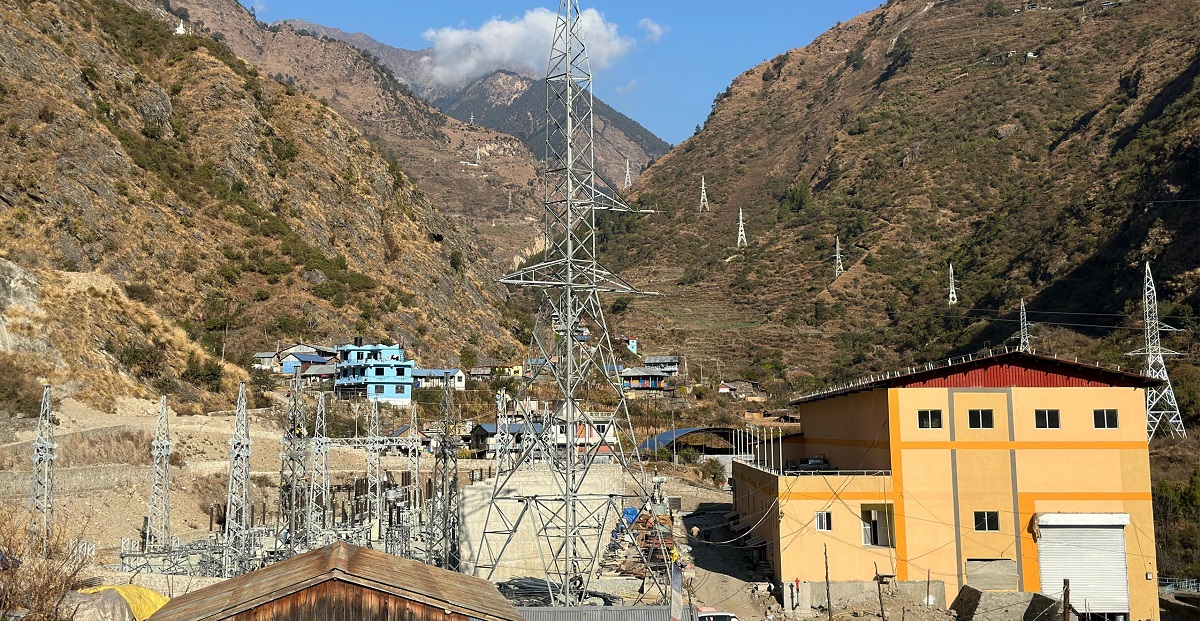
The devastating floods that started in the upstream of the Bhotekoshi River in Tibetan territory on August 26 have inflicted heavy human casualty along with a massive property losses of the people living in districts like Rasuwa and Nuwakot.
Besides severe damages to villages, settlements, markets, roads, bridges and hydropower project structures were completely damages, the most important is many precious lives were lost in the floods. The latest government reports also show the horrific state of the disaster. Thousands of people are still unaccounted for, hundreds of bodies have been found, and a large number of Nepali and foreign citizens are being searched for. Nepal is now mourning as the entire world is terrified.

The most painful aspect of this disaster is not just the death and material damage statistics - it is the possibility that there may still be a large number of alive left somewhere waiting for being rescued. Inside a tunnel, on the edge of a cliff, or in a settlement swept away by the flood, people may still be struggling for their lives. Therefore, the first and foremost priority of the state still now is - to save lives.
The wrecked physical infrastructure can be rebuilt. Roads can be rebuilt, bridges can be reconnected, and collapsed hydropower projects can be raised again. But lost lives cannot be brought back. The government has initially pointed out the need for damage and reconstruction worth billions of rupees. But no matter how great the economic value of the damage, it cannot be compared to the life of a citizen. Therefore, now, before making big announcements about reconstruction and calculating the damage, the state should utilize all its energy and focus on opening every possible door for rescue.
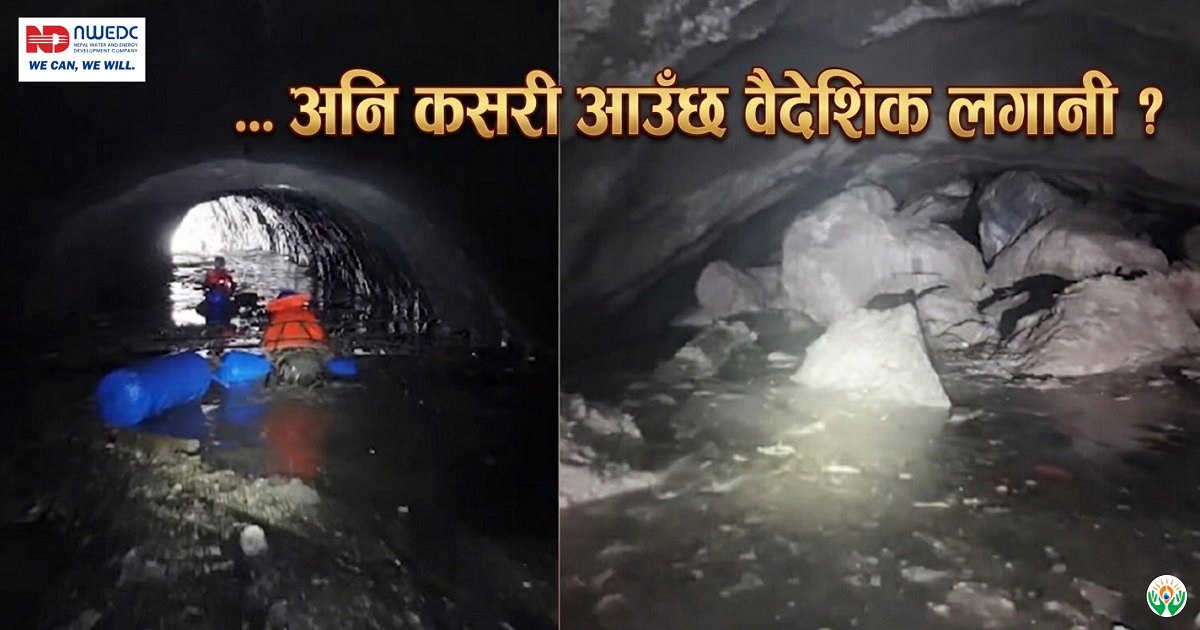
In this context, the questions rose about the rescue of employees and workers trapped in the tunnels of hydropower projects are serious. In projects including Upper Trishuli-3 'A', Upper Trishuli-3 'B', Upper Trishuli-1, Chilime, Rasuwagadhi, and Langtang, their families are worried and distressed day and night as rescue teams have not been able to reach the people trapped in the tunnels after the floods. Rescue inside the tunnels is not an ordinary search and effort; it requires special technical capabilities, equipment, communication systems, and experience. But in such extraordinary circumstances, making meaningful efforts on time is the biggest concern. Even a minute of delay in rescue operation cannot be blamed to any bureaucratic hassle.
The search and rescue of people trapped in each tunnel or affected area must be carried out at a rapid pace in parallel, because progress in one affected area does not alleviate the suffering of people trapped in other areas. The state's rescue mechanism must show a war pace action to reach all possible survivors.
The question of international cooperation in this disaster has also sparked a serious debate in the government's decision-making process. Initially reluctant to directly involve foreign-based search and rescue teams, the government has very lately allowed the mobilization of expert teams from countries including India, China and South Korea for special technical tasks such as tunnel rescue. An Indian special tunnel rescue team, Chinese technicians and a South Korean rescue team have already reached the affected area. This decision, although belated, is a step in the right direction.
The government however claims that it has not rejected foreign assistance, while the supports were accepted according to needs and specific objectives, but it is the government's responsibility to provide a clear and objective answer to the question of why international technical assistance was not requested immediately in the early hours of the disaster, apart from facilitating use of the necessary special equipment and experienced hands for rescue. The ego of diplomatic prestige or state capacity cannot be above the priority of saving lives. No doubt, Nepal should do what it can by itself, but receiving timely assistance based on the severity of the situations is not a weakness, but the hallmark of a responsible state.
The 216 MW Upper Trishuli-1 project, in particular, has posed a serious issue of the human and economic devastations of this catastrophe. After a South Korean citizen went missing from the area of the project under construction with Korean investment, the Korean government promptly mobilized its own special team for the rescue. In fact, it is also the government's duty to look after the foreign citizens and foreign direct investment based projects, while seeking out every possible technical support and coordination with the related country. The diplomatic mechanism should be made active in rescue from the very first hour of the incident.
The state must now show sensitivity and gear up momentum in relief, rehabilitation and rehabilitation work. The state's responsibility cannot be fulfilled by simply distributing relief materials to homeless families, children who have lost their parents, the injured and citizens who have lost all their property. A concrete plan and its implementation are needed immediately for safe shelter, housing and health care.
This disaster has also raised another serious question—that of early warning and risk related communication. Was the warning of the flood timely made? Was sufficient information transmitted to Nepal from the upper reaches of China? Why did the potential information available within Nepal not reach local communities, riverside residents, and hydropower projects effectively? These questions require an impartial investigation.
Blame game does not take anyone to meaningful output. The promoters and regulators of hydropower projects have no escape from their responsibilities. Projects with billions of rupees in investment must have automated systems that receive real-time information from the upper watershed, river level and flow measurement equipment, sirens and communication systems, safe shelters, and clear emergency rescue plans. Project safety cannot be limited to the structural safety of dams, tunnels, and powerhouses; the life safety of every employee working there must also be an integral part of the project's cost and design.
The government must also make public scientific and impartial conclusions about the real cause of this disaster. Initial studies made at international level and news reports have pointed to the possibility of a flash flood after a large block of glaciers or ice-rocks and landslides fell into the river and formed a temporary barrier, but the government itself has yet to fully establish the cause of the incident. Therefore, instead of drawing conclusions based on rumors and speculation, the real cause should be identified through an independent study involving geologists, glaciologists, hydrologists, and climate scientists.
There is no longer any dispute about one fact—the impact of climate change in the Hindu Kush Himalayan region is intensifying. The scientific community has long warned about the possibility of melting glaciers, changing the conditions of glacial lakes, increasing large-scale events of avalanches and landslides, and increasing the risk of flash floods in river systems. Therefore, it would be another big mistake to dismiss this incident as a separate and exceptional accident.
Nepal's development pattern has also become a matter of reconsideration. The practice of expanding villages and settlements along river banks, narrowing the natural flow area of rivers, building unorganized roads and structures on fragile terrain, and building large infrastructure without adequate risk assessment must now change. Integrated settlement development in safe places, scientific management of river corridors, clear mapping of risk areas, and land use policies accordingly are no longer an option, but an imperative necessity.
Nepal is a country at high risk of floods, landslides, earthquakes, and other natural disasters. Therefore, the tradition of returning to the old path after a few days of mourning and a few months of relief programs after each major disaster must end. The national disaster management system should be linked to a modern system of rescue, preparedness, risk reduction, scientific forecasting and international cooperation. The state should have permanent access to separate specialist capacity and equipment for tunnel rescue, mountain search and rescue and management after major floods.
The time has come to reconsider the role of professional organizations. Engineering and technical organizations, including the Nepal Engineers Association, should create a clear mechanism to mobilize their members and the country's technical manpower for search and rescue during disasters. At the time of emergencies, professional organizations should not be limited to issuing press releases; they should become a means to connect the available expertise, equipment and manpower with the state's rescue operations.
Nepal's need today is not only to point out the guilty, but to learn from mistakes. No one can escape responsibility in the name of learning lessons. The delay in rescue, the weakness of the information system, the confusion seen in the mobilization of international assistance and the development made in the risky areas should be evaluated. A fair review of this should be conducted and a concrete improvement plan for the coming days should be made public. These are the details.
First of all, the state should focus all its efforts on the search and rescue of people trapped in tunnels and those without contact elsewhere. The search should not stop as long as there is a chance of survival. In parallel, relief and rehabilitation work should be carried out effectively to return the victims to a safe life. And, finally, instead of repeating the same old mistakes while rebuilding the destroyed structures, a new development approach should be adopted, focusing on climate change and mountain risks.
This flood is not just a natural disaster; it has raised serious questions about our development models, disaster preparedness, early warning system, and the state's rescue capacity. These questions should now be answered not with speeches, but with life-saving work. Let us first reach the missing people, save the lives that can be saved—and only then talk about reconstruction.