Background
In early 2025, this writer had the opportunity to visit the children’s Disabled Rehabilitation Center (DRC) Nepal at Gokarna in Kathmandu. The Center provides food, shelter, education and even assistance in procuring the necessary equipment for the differently disabled children. Having worked and retired from Nepal’s electricity sector, the writer’s attention was immediately drawn to DRC’s following two children1 who tragically were victims of Electricity Accidents:

Nirman Puri – birth Chaitra 27, 2071: Aathbiskot, Rukum West district; father Bharat Puri a labourer working in India and mother Jani Puri a Health Assistant in village Health Post; electrocuted on 23th Jestha 2078 at age 7 years; treated at Nepal Cleft & Burn Center at Kirtipur Hospital; right arm amputed at shoulder; admitted to DRC Nepal on 9th Baisakh 2081; now 11 years old, he is in Class 6 at Gokarneshwar Mahadev English Boarding School.
Nirman’s Tragic Electrical Accident: Seven year old Nirman was looking after his goats about 200 meters away from his house. A dozer had dug up a drain for the road and piled up the earth dump that was very close to the high tension wires. Thinking that his goats may get too close to the high tension wires, Nirman picked up a kancho/green stick and tried to drive away his goats from the earth dump. Nirman’s kancho/green stick, unfortunately, touched the high tension wires and he was electrocuted.
Nirman’s shirt caught fire and he fell on his face, unconscious. A nearby 13/14 year old boy saw the accident and raised alarm. Nirman’s mother rushed to her son and tore away the burning shirt. A villager drove Nirman and his mother on his motorcycle to the Radi Nagar Palika hospital where his badly burnt body was dressed, given some medicines and referred to the Bheri Hospital in Nepalgunj.
As Nirman’s father was a mere labourer working in India, his mother took a loan of Rs two Lakhs from a relative, hired a jeep and drove to Bheri Hospital Nepalgunj where the doctors referred the badly burnt Nirman to Kathmandu’s Cleft & Burn Center at Kirtipur Hospital. An oxygen laden ambulance charged Rs 40,000 and Nirman was brought to Kirtipur Hospital on Jestha 23, 2078.
As Nepal Electricity Authority (NEA) agreed to pay the Hospital’s bed and medicine charges, it appears that the high tension wires belonged to NEA.However, Nirman’s mother had to bear all otherexpenses. So she had to take loans of Rs 300,000 from Global IME Laghubitta Bittiya Sanstha and another Rs 300,000 from Sana Kisan Sahakari to pay for Nirman’s right arm amputation at shoulder. An organization BVS – Nepal (Burn Violence Survivors) did assist Nirman’s mother with Rs 45,000 and some useful materials for Nirman. It was BVS-Nepal that recommended Nirman’s mother to send her son to DRC Nepal and he arrived at Gokarna’s DRC on Baisakh 9, 2081 and is studying at a local school in Class VI.
At Nepal Cleft and Burn Center of Kirtipur Hospital: The grisly photos of 7 year old Nirman’s burnt out back and the burnt left hand that fortunately got saved. His burnt out right hand, however, had to be amputed at the shoulder.
A smiling Nirman though minus his right arm and left arm still with badly burnt marks !
Tekendra Lowar – birth Ashwin 25, 2069: Budhinanda, Bajura district; father Karnabir Lowar and mother Dhansa Lowar, local peasants; electrocuted on 2ndShrawan 2081 at age 12 years; treated at Nepal Cleft and Burn Center at Kirtipur Hospital; left arm amputed at shoulder; admitted to DRC Nepal on Baisakh 17, 2082; now 13 years old he is in Class 3 at Kathmandu’s Khagendra New Life Special Education Secondary School.Tekendra’s Tragic Electrical Accident: Tekendra was a good student and in his Class IV, he used to come first or second. On Shrawan 2, 2081, 12 year old Tekendra took his goru/ox for grazing in the jungle.
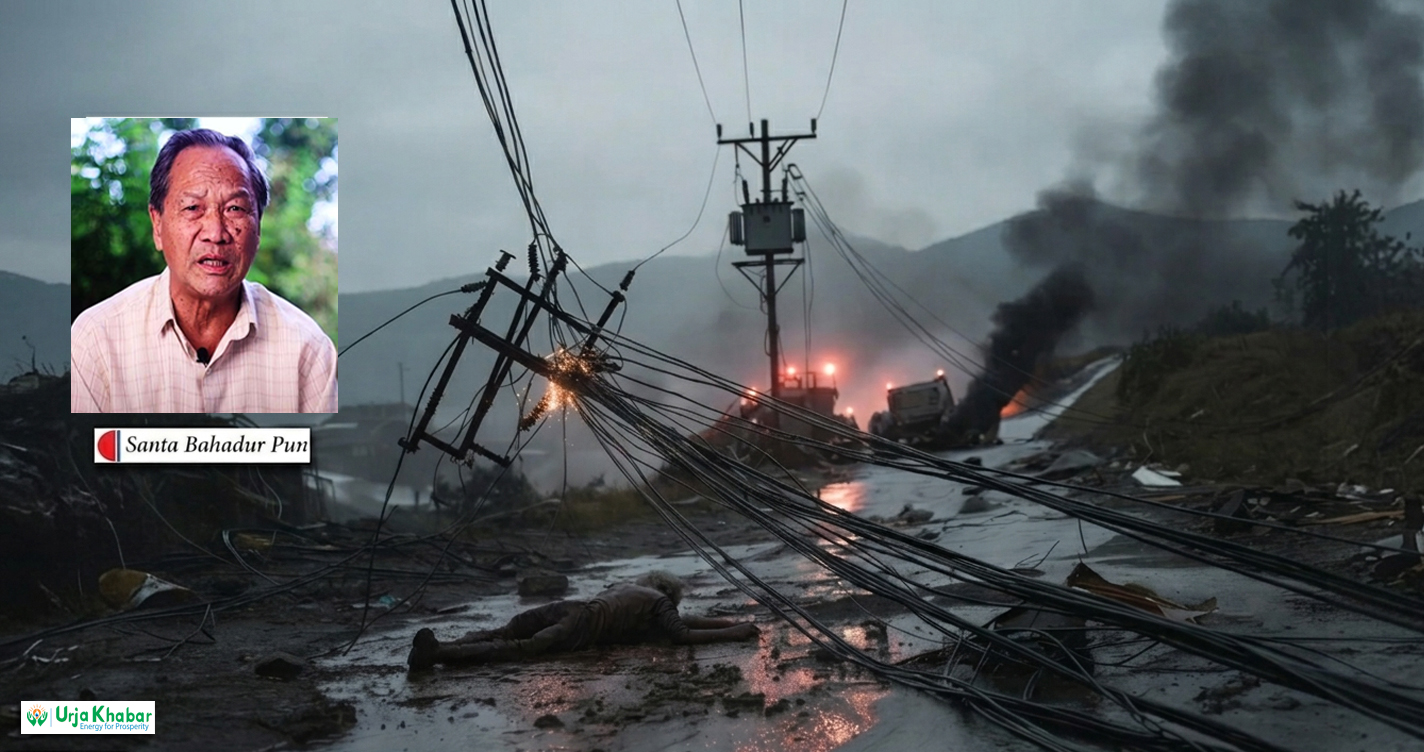
The Budhinanda Municipality operated a small hydroelectric plant which used to remain shut during the day time and operated only during the night time. On that particular day of Shrawan 2, 2081 because of some functions, the municipality authorities had the hydroelectric plant operating during the daytime also. Unfortunately, the badly strung high tension wires touched Tekendra’s head and got electrocuted. Those who saw him took him to the nearby Kolti Hospital from where he was taken to the Nepalgunj Hospital with badly burnt head and body. Tekendra was then referred to the Nepal Cleft and Burn Center at Kirtipur Hospital where his left arm had to be amputed. His hospital expenses came to about Rs 9 lakh which his family paid through loans and donations like those of Rs 40,000/- provided by their villagers working in India.
At Nepal Cleft and Burn Center in Kirtipur Hospital: 12 year old Tekendra with his severely burnt head with the grisly hole just above his left
ear and after his left arm was amputed.
A smiling Tekendra- minus his left arm!
The writer had difficulty seeing the above grisly traumatic photos of 7 year old Nirman and 12 year old Tekendra being treated at the Kirtipur Hospital. Traumatic and grisly not only to the victims but also their parents who, being from the remote districts of West Rukum and Bajura, had to undergo another trauma of searching for finances to pay the hospital charges. The writer, hence, determined that the photos, though grisly, be retained in the article with the hope that the Government and the concerned Institutions will do something about Electrical Safety and not resort to mere lip services.
“Safety for the NEA personnel while operating and maintaining the electrical supply as well as safety to the consumers will be accorded a high priority.”
If that above ‘high priority’ for electrical safety had been given timely recognition by the concerned authorities and institutions, the tragic electrical accidents of Nirman and Tekendra would probably have been prevented.
Chief Electrical Inspector and Electrical Inspectorate: When this writer joined the then Nepal Electricity Corporation (NEC) as an Assistant Engineer in 2024 BS (1967 AD), he still remembers the then Ministry of Water and Power having an Electrical Inspectorate. The then Chief Electrical Inspector was Gyan Mani Dixit, former General Manager of Nepal Electricity Corporation, who enjoyed an aura of power and autonomy. NEC’s system peak load then was only 8.2 MW and the number of domestic consumers as 19,986. Electricity in 2024 BS was definitely a Luxury that only a few urban elites enjoyed.
Six decades down the road, while the 8.2 MW peak load jumped over 26 times to 2,212 MW, the number of domestic consumers made a remarkable jump of over 2,500 times from 19,986 to 4,997,612.According to the World Bank Nepal has achieved an electrifi cation ratio of 94% which means 94% of the Nepalese have access to electricity. In six decades, electricity for the Nepalese turned into a Necessity from Luxury – not unlike the developed western world.
Electricity is an extremely versatile servant – a necessity in all the everyday activities of Nepalese. However, this versatile servant demands a very high Safety Standard which if neglected can result in dire consequences. As many as 29 farmers have died in drought-hit Madesh over the past one year from electrocution. According to the data provided by the Madhesh Province Police Office, a total of 449 people have died of electric shock in Madhesh Province over the past fi ve years – most of them from electric shocks while working on water pumps for irrigating fields. In the event of death due to electrocution, NEA forms a probe committee, comprising local representatives and administration officials, to determine whether there was negligence on its part. If NEA’s negligence is established, the authority pays Rs 5,00,000 in compensation. Between 2018 and 2023, thirty-eight families across eight Madhesh districts received compensation. Families also get compensation from NEA for animals killed by electric shock – Rs 15,000 per ox and Rs 20,000 per buffalo.
Implementation of Electricity Act 2049 BS (1991 AD): But unfortunately somewhere along that six decades’ road from Luxury to Necessity, the Electrical Inspectorate in the Ministry to oversee Electrical Safety lost its way. The Electricity Act formulated in 2049 BS (1991 AD) did envision Electrical Safety and Electrical Inspectorate. Clauses 37 and 38 of the Electricity Act categorically stipulated:
37-Appointment of Inspector: In order to carry out inspection and supervision of generation, transmission and distribution of electricity, Government of Nepal may appoint Chief Electricity Inspector and Electricity Inspector as may be necessary. (2) The qualification required for the Chief Electricity Inspector and Electricity Inspector shall be as prescribed. (3) Other functions, rights and duties of the Chief Electricity Inspector and Electricity Inspector shall be as prescribed.
38-Penalties: The prescribed officer may impose a fine up to five thousand rupees to any person who acts in contravention of this Act or Rules made under this Act. If the damage is caused to anybody due to such act, compensation for such damage shall also be realized from such person by the prescribed officer.
Conclusion
Hive off the Electricity Inspection from Department of Electricity Development (DoED) to Ministry –Sadly, the Ministry off -loaded its Inspectorate job to the DoED whose priority, as its very name implies, is to develop electricity. The DoED does have an Inspection Division headed by a Deputy Director General of Class I officer level. This Inspection Division has two Sections, one a Project Inspection and the other Electricity Inspection. While the glamorous Project Inspection is manned by three Class II and two Class III level officers, the mundane Electricity Inspection has only one Class II and one Class III level officers.
This, in short, explains the travesty of the state of Nepal’s electrical safety. In order to mitigate the growing number of tragic electrical accidents, like those in Madhesh Province and those of 7 year old Nirman and 12 year old Tekendra in far-away Rukum West and Bajura, this travesty must be addressed immediately. The government must as early as possible hive-off Electricity Inspection from DoED to its Ministry itself as was the previous practice. The Inspectorate must be given full autonomy and the necessary power to inspect and punish the agencies defaulting on Electrical Safety.
Top priority and due recognition must be accorded to Electrical Safety that is so urgently required as 94% of Nepalese have access to electricity. Is it fair for the children, Nirman and Tekendra, to lose one of their arms for no fault of theirs? Similarly, is it fair at all for the parents of the children to bear all the huge expenses in treating their children all because of someone else’s negligence? These hopefully are some of the difficult questions the government should address.
Footnote
1. The writer thanks Ms Tshering Sherpa, General Secretary of DRC Nepal, for kindly availing all the information regarding the two children Nirman Puri of Rukum West and Tekendra Lowar of Bajura as well as about the DRC organization itself. Thanks go to the journalist, Mr. Prakash Singh, for providing more information about Tekendra and also, of course, to the DRC Chairman Uday Bahadur Limbu.
The writer is the foremer Managing Director of Nepal Electricity Authority. This article has been excerpted from the semi-annual Urja Khabar magazine published in January 2026.