 Dr. Biraj Singh Thapa

As the global community struggles with the severe implications of climate change,the transition to Clean Energy (CE) has emerged as a critical priority. Among the myriad of CE options, hydrogen stands out for its potential to revolutionize the energy landscape. This article explores the historical context of global warming, the rise of CE, the benefits and challenges of hydrogen, the global shift toward hydrogen, and the role of regulatory bodies in governing its development. Finally, it proposes establishing a regulatory framework for hydrogen in Nepal, drawing on best practices
from around the world.
Global Warming and Shift to CE

The history of global warming awareness dates back to 1938 when Guy Callendar, a British engineer and amateur meteorologist, first observed that the Earth’s temperature had risen by 0.3 degrees Celsius over the previous 50 years. This discovery marked the beginning of a scientific journey that would reveal the profound impact of human activities on the Earth’s climate. By 2023, studies showed that the planet had warmed by approximately 2.45 degrees Fahrenheit (1.36 degrees Celsius) since the late 19th century. This temperature rise is largely attributed to increased greenhouse gas emissions from industrial activities, deforestation, and other human activities.
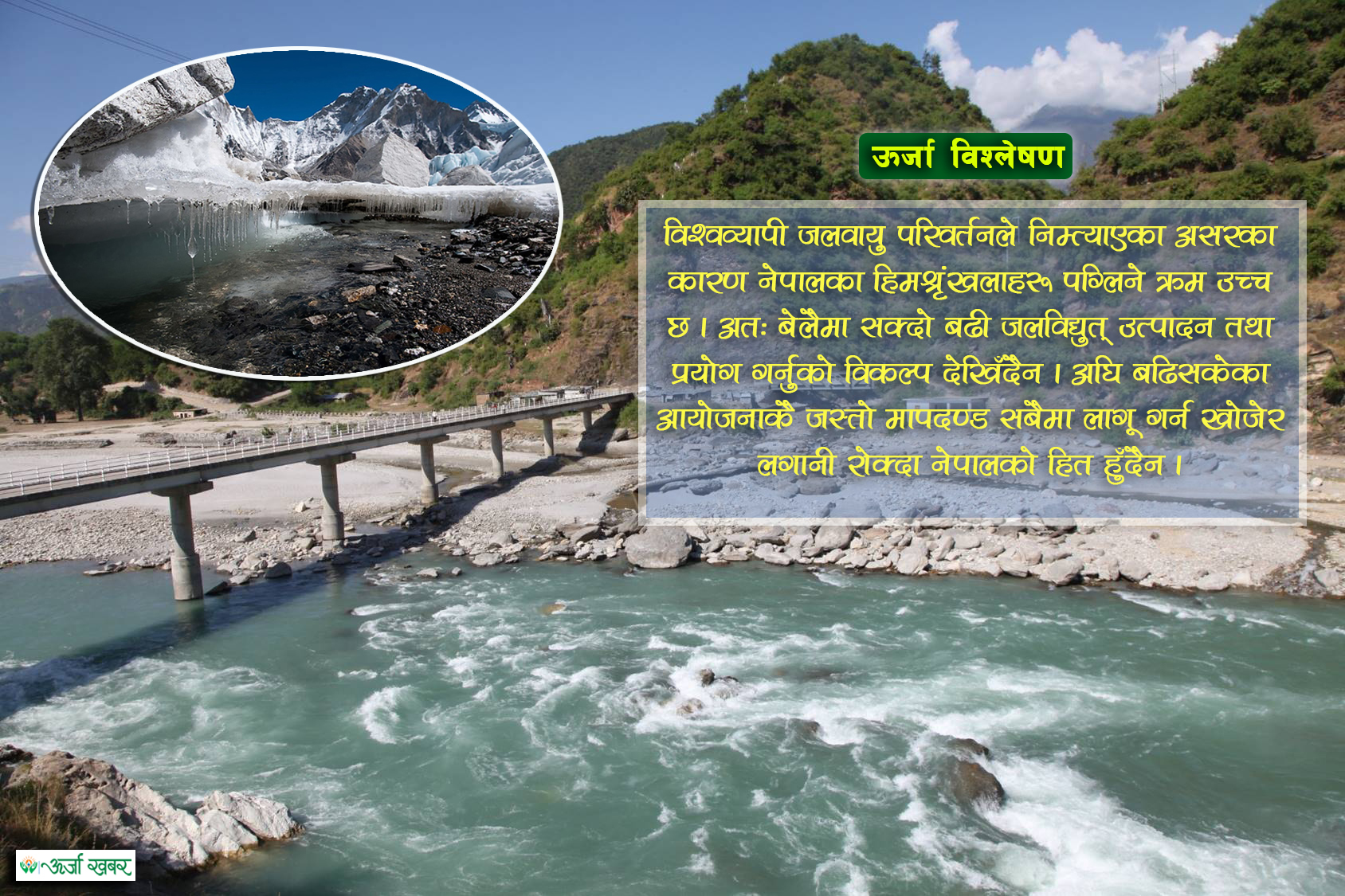
The consequences, including melting ice, rising sea levels, and intense heat waves, have become increasingly severe. Despite their minimal contribution to global emissions, small economies like Nepal are highly vulnerable to these impacts, facing challenges like glacial retreats and extreme weather events.
In response to the climate crisis, global initiatives have been launched to address the growing threat. The 1992 Rio Earth Summit marked a significant milestone with the introduction of the United Nations Framework Convention on Climate Change (UNFCCC), which unites countries through the Conference of the Parties (COP). This was followed by the Kyoto Protocol, which operationalizes the UNFCCC by committing industrialized countries and economies in transition to limit and reduce greenhouse gas emissions per agreed individual targets; the Paris Agreement, where 196 nations committed to limiting global warming to below 2°C; and various other initiatives. These collective efforts reinforce global commitments to reduce carbon emissions and strive to limit the rise in global temperatures to 1.5 degrees Celsius.
On a national level, countries are aligning with these commitments by advancing renewable energy policies and reducing dependence on fossil fuels. Nepal has also set ambitious renewable energy targets under its Nationally Determined Contributions (NDCs) and actively engages in international initiatives, including the United Nations Climate Change Conferences, with COP-28 being the most recent.
In recent years, the global drive to limit greenhouse gas emissions and reduce dependence on fossil fuels has significantly accelerated the growth of renewable energy. Technological advancements and decreasing costs have made renewable energy more accessible and economically viable, leading to substantial global investments. Among these developments, hydrogen has emerged as a key CE source with the potential to decarbonize various sectors. However, to fully harness hydrogen’s potential, strong regulatory frameworks, adequate infrastructure, and effective market mechanisms are necessary to ensure its safe and efficient application.
Hydrogen: Benefits and Challenges
The potential of hydrogen as an energy carrier has been recognized for over a century. In the early 19th century, scientists discovered that hydrogen could be used to produce energy and that it has the highest energy content by weight among the general fuels, making it ideal for energy-intensive applications. However, it wasn’t until the 1960s that hydrogen found widespread use, notably in NASA’s Project Gemini, where fuel cells powered probes, satellites, and space capsules.
As the country embarks on this journey, it must prioritize safety, innovation, and inclusivity, ensuring that the benefits of hydrogen are realized for all its people.
Despite these early applications, the development of hydrogen as an energy source stalled due to the high cost of production, storage, and transportation, as well as safety concerns. Hydrogen’s highly reactive and flammable nature presents safety risks that require careful management, and early research faced setbacks from incidents related to its storage and transportation. These safety challenges, combined with the availability of cheaper fossil fuels, led to a period of stagnation in hydrogen development.
Moreover, environmental concerns also posed a significant challenge. The majority of hydrogen is currently produced from fossil fuels, resulting in substantial carbon dioxide emissions. Although green hydrogen, produced using renewable energy sources, offers a cleaner alternative, its development has been hampered by high costs, technical barriers, and the lack of necessary infrastructure and regulatory support.
The Global Shift Towards Hydrogen
In recent years, there has been a resurgence of interest in hydrogen, driven by advancements in technology, decreasing costs of renewable energy, and growing concerns about climate change. The development of electrolysis technology, which uses electricity from renewable sources to split water into hydrogen and oxygen, has made green hydrogen a more viable option. Governments and industries are now investing heavily in hydrogen research, development, and deployment, recognizing its potential to decarbonize sectors that are difficult to electrify.
Governments worldwide are implementing policies to advance hydrogen production, infrastructure, and market development. Countries like Japan, Germany, and South Korea are leading the way in developing hydrogen strategies and roadmaps. These efforts are supported by international collaborations, such as the International Energy Agency (IEA), Hydrogen Council, International Renewable Energy Agency (IRENA), International Partnership for Hydrogen and Fuel Cells in the Economy (IPHE), among others, which bring together governments and industries to promote hydrogen as a key element of the global energy transition.
Public-private partnerships and technological innovation are also fueling the hydrogen revolution. These are essential for scaling up hydrogen production, reducing costs, and creating sustainable markets. Advances in electrolysis, fuel cells, and hydrogen storage are enabling more efficient and cost-effective hydrogen production and utilization. As these technologies continue to mature, the cost of green hydrogen is expected to decline, making it competitive with fossil fuels and other renewable energy sources.
India’s hydrogen regulatory framework is managed by the Ministry of New and Renewable Energy (MNRE), which oversees the coordination and implementation of the Green Hydrogen Mission.
Regulatory Frameworks Across Different Countries
Globally, countries have instituted diverse regulatory bodies and institutional frameworks to govern the development and integration of hydrogen within their energy systems. These entities are pivotal in ensuring the safe production, storage, transportation, and utilization of hydrogen. Below is an overview of these regulatory bodies:
Australia
Australia’s hydrogen regulatory framework is led by the Australian Renewable Energy Agency (ARENA), which ensures that the private sector has access to the tools, technology, and business models necessary to deliver secure and reliable renewable energy. ARENA also researches to inform policy decisions and fosters collaboration across the energy sector, government, startups, and universities. The Clean Energy Finance Corporation, established by the Clean Energy Finance Corporation Act, provides financial support to advance the hydrogen sector. Additionally, the Clean Energy Regulator, established by the Clean Energy Regulator Act 2011, administers the Australian Government’s carbon abatement schemes, including the Guarantee of Origin, which tracks and verifies emissions associated with hydrogen production.
Egypt
Egypt’s National Council for Green Hydrogen, chaired by the Prime Minister and comprising various key ministers and officials, coordinates the country’s hydrogen strategy. The Council aims to unify state efforts to stimulate investment in green hydrogen, aligning with sustainable development goals and enhancing Egypt’s international competitiveness. The Council is responsible for implementing and updating the national strategy, approving necessary policies, and ensuring coordination among relevant ministries and authorities.
India
India’s hydrogen regulatory framework is managed by the Ministry of New and Renewable Energy (MNRE), which oversees the coordination and implementation of the Green Hydrogen Mission. The MNRE collaborates with other concerned ministries, departments, agencies, and institutions to execute India’s hydrogen strategy, ensuring comprehensive regulatory oversight.
Japan
Japan’s regulatory framework for hydrogen is overseen by the Ministry of Economy, Trade and Industry (METI) and the Ministry of Land, Infrastructure, Transport and Tourism (MLIT). These ministries are responsible for developing policies to promote the supply and use of low-carbon hydrogen under the Hydrogen Society Promotion Act. Approved business plans can receive subsidies and regulatory exemptions. Several other bodies, such as the Industrial and Product Safety Policy Group and the Japan Organization for Metals and Energy Security, also play roles in administering safety regulations, environmental protection, and infrastructure development through various laws and subsidy programs.
South Korea
In South Korea, the Ministry of Energy is responsible for issuing licenses and registrations for hydrogen-specialized businesses under the Hydrogen Act and instructing facility owners to develop hydrogen fuel supply facilities. The Hydrogen Economy Committee, comprising the Ministry of Energy and seven other government bodies, spearheads the coordination and implementation of the country’s hydrogen strategy. Chaired by the Prime Minister, the Committee oversees and deliberates on key policies and plans for advancing the hydrogen economy. The Korea Testing Certification Institute and the Korea Testing & Research Institute, designated by the Ministry of Trade, Industry, and Energy, are responsible for certification testing and evaluation under the Clean Hydrogen Certification procedure.
United Kingdom
In the UK, the Hydrogen Delivery Council, co-chaired by a Department for Energy Security and Net Zero Minister and an industry representative, leads the regulatory efforts. The Council serves as the primary forum for collaboration between the government and the hydrogen sector, promoting the deployment of low-carbon hydrogen across the UK energy system. The Office of Gas and Electricity Markets (OGEM) regulates the gas network, including hydrogen, under the Gas Act 1986. The UK Vehicle Certification Agency approves hydrogen transport vehicles, while the Oil and Gas Authority regulates new pipelines and decommissioning activities.
United States
In the United States, the Hydrogen and Fuel Cell Technologies Office, under the Department of Energy, leads efforts to advance hydrogen and fuel cell technologies. The Federal Energy Regulatory Commission (FERC) may regulate the transportation of hydrogen if blended with natural gas, though an Act of Congress is required to define FERC’s scope. The Pipeline and Hazardous Materials Safety Administration oversees the regulation of hydrogen transportation, ensuring compliance with safety standards.
Comparative Analysis
A study of the hydrogen regulatory bodies reveals that their primary functions include setting safety standards, developing and enforcing regulations, facilitating research and development, and promoting market development. These institutions also develop policies and frameworks to support the growth of the hydrogen economy, including setting targets for hydrogen production, offering financial incentives for hydrogen projects, and creating regulatory pathways that integrate hydrogen into existing energy systems by removing regulatory barriers. Additionally, they play a crucial role in fostering innovation by funding research and pilot projects that advance hydrogen technologies and applications.
On the other hand, a comparative analysis of regulatory approaches reveals that while there is no one-size-fits-all model, several best practices can be identified. For instance, in Australia, the focus is on integrating the private sector into the energy transition through collaboration and knowledgesharing facilitated by the Australian Renewable Energy Agency alongside rigorous regulatory frameworks enforced by bodies like the Clean Energy Regulator. Japan’s strategy is notable for its detailed regulatory exemptions and subsidy systems under the Hydrogen Society Promotion Act, showcasing a multi-agency collaboration to address sectorspecific challenges. In contrast, the USA adopts a technology driven approach focused on research and development, with an evolving regulatory landscape that could expand to include broader hydrogen governance.
These varied approaches demonstrate that effective hydrogen regulation requires a combination of strong leadership, clear policy frameworks, and collaboration between government, industry, and academia. As Nepal considers establishing its hydrogen regulatory framework, it can draw on these lessons to create a model that aligns with its unique context and priorities.
Proposal for Nepal: Establishing Nepal Green Hydrogen Development Commission
Justification for a Regulatory Framework: Aligning with Global Trends
Nepal’s energy landscape is at a crucial turning point. As the world moves towards CE and netzero carbon emissions, Nepal and the South Asian region remain heavily dependent on fossil fuels, necessitating a strategic shift towards sustainability. Green hydrogen, an emerging key element in global energy transition strategies, offers Nepal a unique opportunity to align with global sustainability efforts. With its abundant CE resources, strategic position for power system stability, and ample water availability, Nepal is well-positioned to become a leader in green hydrogen production. Establishing a dedicated regulatory framework by drawing inspiration from the global practices for green hydrogen is essential to unlocking its potential as a CE source and positioning Nepal as a regional leader in CE innovation.
A regulatory framework would provide the necessary guidelines for the safe and efficient production, storage, and utilization of green hydrogen. It would also create an enabling environment for investment in hydrogen infrastructure and technology, fostering economic diversification through hydrogen-derived products in the global market.
Institutional Structure
The proposed Nepal Green Hydrogen Development Commission (the “Commission”) will serve as the central regulatory body for green hydrogen in Nepal. Established by the Green Hydrogen Policy 2024, the Commission is envisioned as an intermediate institution that will operate until a permanent entity is institutionalized by the relevant statute. The Commission will be responsible for developing and implementing strategies exclusively dedicated to green hydrogen, recognizing its potential to become a mainstream energy solution shortly.
The Commission will work closely with other government agencies, industry stakeholders, and international partners to
promote research, innovation, and investment in green hydrogen technologies.
Objectives:
❖ Policy Frameworks and Regulations: The Commission will develop and implement policies, strategies, and regulations necessary to introduce green hydrogen as a key energy carrier and industrial commodity in Nepal. This includes establishing frameworks for subsidies, taxation, and project development.
❖ Market Development and Investment: The Commission will build a foundation for national and international commercial opportunities in green hydrogen, attracting investments in infrastructure and business development. The goal is to develop a domestic hydrogen supply chain that can eventually integrate into the global market.
❖ Research, Innovation, and Safety: The Commission will promote research and development, set safety standards, and ensure compliance with policies and regulations. It will involve continuous monitoring of green hydrogen projects and fostering innovation through pilot projects and international collaborations.
Strategic Action Plan
The Commission will implement its mission through a phased approach:
❖ Phase I (2081-2082): Establish regulatory frameworks, policies, and institutional setups, benchmarking against
global standards.
❖ Phase II (2082-2087): Focus on licensing innovative green hydrogen projects and pilot projects to encourage
technological advancements.
❖ Phase III (2087-2091): Expand Nepal’s global presence in the green hydrogen market, facilitating largescale commercial projects and attracting foreign direct investments.
Governance and Structure
The Commission will include members appointed by the Government of Nepal, including experts in economics, commerce, management, law, and engineering. This structure ensures that the Commission is equipped with the necessary expertise to guide Nepal’s green hydrogen sector.
Resource Generation and Sustainability
The Commission will prioritize minimizing the financial burden on the government by relying on grants from domestic and international sources. It will also seek publicprivate partnerships and corporate sponsorships to share costs and risks.
Exit Strategy
The Commission is designed to operate for up to 10 years. After this period, it is expected to be succeeded by a permanent national entity, with all developed infrastructure and ongoing activities transferred to government ownership.
Conclusion
The shift to CE is a global imperative, driven by the urgent need to mitigate climate change. Hydrogen, with its potential to decarbonize multiple sectors, plays a crucial role in this transition. However, the successful application of hydrogen requires robust regulatory frameworks, supported by strong institutions, clear policies, and international cooperation.
For Nepal, the establishment of the Nepal Green Hydrogen Development Commission offers a unique opportunity to align with global trends, leverage its renewable energy resources, and build a sustainable and resilient energy future. By drawing on best practices from around the world, Nepal can create a regulatory framework that not only supports hydrogen development but also contributes to the global effort to combat climate change. As the country embarks on this journey, it must prioritize safety, innovation, and inclusivity, ensuring that the benefits of hydrogen are realized for all its people.
Mr. Thapa is a team leader at Green Hydrogen Lab and associate professor at the Department of Mechanical Engineering, Kathmandu University. This article is taken from the 7th issue of Urja Khabar, a bi-annual magazine. Which was published on 7 January, 2025.
email: [email protected]