 Apekshya Subedi
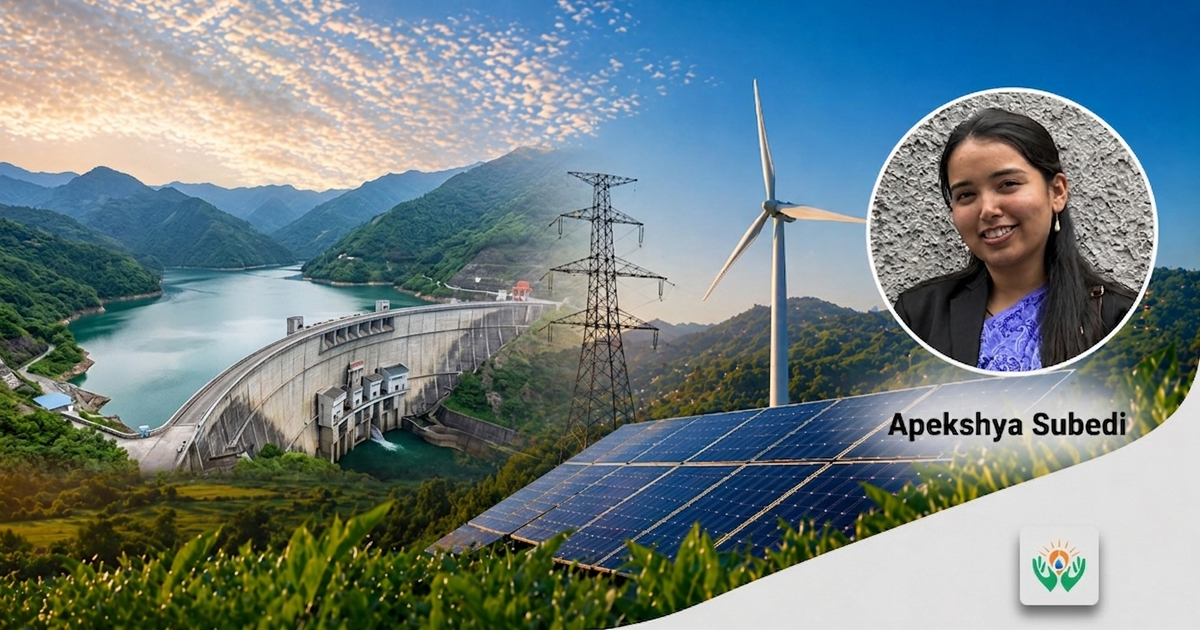
Nepal sits on one of the world’s richest hydropower reserves, yet every winter it turns to India to keep the lights on. This seasonal paradox of abundance in theory and scarcity in practice has captured the central flaw in Nepal’s energy planning. The issue is not the absence of resources, but how the national energy budget continues to allocate them.
Over the past decade, Nepal’s energy budgets have followed a predictable trajectory. Early allocations focused on rural electrification, expanding access to communities long left off the grid. This was followed by an urgent push to end load-shedding, culminating in the 2015 declaration of an “energy emergency decade.” Subsequent budgets emphasized grid connectivity, surplus generation, export ambitions, electric vehicle promotion, and large-scale hydropower investments.

Each phase delivered visible gains, but each was also narrowly focused. The energy budget peaked in fiscal year 2021/22 and has since declined. This shift raised questions about both the commitment and direction of national priorities. More importantly, this history reveals a deeper pattern: while priorities shift, the structural weaknesses of the energy sector remain unaddressed.
At the core of the problem is overdependence on a single source. Around 99.1 percent of Nepal’s electricity is generated from hydropower, while solar accounts for a negligible 0.1 percent. This is not diversification; it is concentration risk. Most of Nepal’s hydropower projects are run-of-river, meaning their output fluctuates with seasonal water flow. During the dry winter months, electricity generation can drop by nearly 60 percent, forcing Nepal to import power from India. At the same time, the broader energy mix tells a different story: oil and petroleum products account for 19.3 percent of the total energy supply, far exceeding hydropower’s 7.9 percent share. In other words, Nepal’s electricity system is hydro-dominated, but its overall energy consumption pattern is varied.
Efforts to diversify have been sporadic and inconsistent. Hydrogen energy research appears in one fiscal budget, only to disappear the next. The much-publicized energy emergency decade has delivered far less than its ambition suggested. The pattern shows that bold declarations are made, but continuity is missing. This disconnect becomes even more apparent when policy frameworks are compared with ground realities.
Nepal is not short of plans. The National Renewable Energy Framework (2017) envisions universal energy access by 2030. The Renewable Energy Policy 2078 shifts the sector from grants to loans and outlines pathways for expansion. The Energy Consumption Growth and Export Strategy 2083 sets an ambitious target of generating 24,500 megawatts over the next decade. But these commitments face systemic constraints. Renewable energy initiatives are hindered by weak stakeholder ownership, coordination failures, limited institutional capacity, fiduciary risks, and a lack of demand creation. Many projects remain financially unviable and struggle to attract private investment.
During the dry winter months, electricity generation can drop by nearly 60 percent, forcing Nepal to import power from India.
The Renewable Energy Policy 2078, while progressive in certain respects, reinforces hydropower’s primacy and pays limited attention to integrating renewables into transportation, industry, or emerging sectors such as data centers. Even policies such as mandatory solar installation for inverter-equipped urban households remain largely unimplemented. The scale of ambition also raises serious fiscal questions. Generating 24,500 megawatts could require an estimated NPR 49 kharba. This is before accounting for transmission lines, storage systems, and grid upgrades.
The gap between targets and realistic budgetary planning remains substantial. At the same time, Nepal stands at a critical juncture. Its geography provides a natural advantage for clean energy development. Regionally, demand is growing as India and China continue to invest heavily in renewable energy infrastructure. Domestically, electricity demand is set to rise with the formalization of the ICT sector, the expansion of data centers, and the rapid adoption of electric vehicles.
These trends present an opportunity, but one that is narrowing. Large-scale investment depends on policy stability, bankable projects, and credible long-term commitment. An inconsistent and declining energy budget sends the opposite signal. Nepal’s next budget must, therefore, move beyond incremental allocations and address the structural gaps in the sector. Four priorities stand out.
First, energy diversification is essential. Nepal must reduce its overreliance on hydropower by scaling solar, wind, storage technologies, and emerging solutions such as green hydrogen—not through one-off allocations, but through sustained, multi-year commitments which include the development of pumped storage hydropower.
Second, the energy mix must evolve. Renewable energy should not be confined to household consumption or rural electrification. It must extend to transportation, industry, and digital infrastructure, where future demand will be concentrated.
Third, energy efficiency must become a central pillar of policy. Demand-side management, industrial incentives, and building standards can significantly reduce system stress and improve overall sustainability.
Finally, energy security must be prioritized. Investment in storage systems and seasonal balancing mechanisms is critical to reducing winter import dependence and stabilizing supply. Smart budgeting is not simply about increasing expenditure; it is about strategic allocation. One concrete step would be the creation of a dedicated, multi-year energy diversification fund, separate from project-based hydropower financing.
Nepal does not lack ambition, nor does it lack natural resources. What it lacks is a budget that aligns both into a coherent, resilient, and future-ready energy system. Until that alignment is achieved, the country will continue to live with a paradox it can and should outgrow.
Miss Subedi is a former student of Energy Law and Legal professional, currently working as a policy consultant
Apekshya Subedi is a former student of Energy Law and a legal professional, currently working as a policy consultant.